
The Gothic style of architecture emerged in France and Italy in the 12th century. It was highly influenced by the Church, and it is most often associated with churches and cathedrals. But what about cities? What are some of the best gothic cities in the world to visit? In this article we will go over the medieval towns with the most beautiful gothic buildings.
What is Gothic Architecture?
The best Gothic cities in the world have incredible Gothic architecture and history. Although most of these are European cities, there are a few other places with a Gothic feel in parts. For example, New York has some fine examples of Gothic Revival architecture.
What is gothic architecture? The architecture of Gothic buildings emerged in the Middle Ages at around 1140 A.D.
At this point, gothic design began to replace Romanesque as the prevalent style for churches throughout Europe. The time period lasted until around 1500 A.D., however, gothic architecture can still be seen today in some parts of the world.
The term gothic, historically, has had a negative connotation. To the early modern people who first used it to describe medieval art, architecture, and culture, gothic was seen as primitive and barbaric.
Today, however, the term is used to describe a popular style of architecture, art, and design. In this sense, gothic is seen as darkly beautiful and refined. Many of the best Gothic cities in the world have been shaped by gothic styles of all types.
Examples of Gothic Architecture
Many people think of gothic cathedrals and castles when they think of Gothic architecture, but that is only one example. Gothic buildings could also include:
- Town halls and city halls
- Government buildings
- Universities
- Monasteries
- Libraries
- Castles
Gothic buildings almost always have one main characteristic: pointed arches. These can be seen in the windows, doors, vaults of ceilings, and more.
Another Gothic characteristic are flying buttresses. These are exterior supports for archways. The reason gothic architects liked to use these arches and buttresses was to create the illusion of height, which is why gothic buildings seem taller than they are.
Gothic architecture is not just about looks; it has a very interesting history. Many historians believe that the term “gothic” derives from a German word that some scholars interpret to mean “barbarian.”
These historians believe that this is why some people associate the Gothic style with the Germanic tribes, who were considered barbarians by the Roman Empire. Others disagree with this theory, however, and think it may actually derive from an old French word for “Gaul.”

Best Gothic Cities in the World
The best gothic cities in the world mentioned below were chosen based on several different factors. These include their history related to gothic architecture, the types of gothic buildings they have and their overall popularity as tourist destinations for people who are fans of gothic heritage.
Some notable examples of Gothic architecture include: Notre Dame de Paris (France), Cologne Cathedral (Germany), Burgos Cathedral (Spain), Rouen Cathedral (France), Zagreb Cathedral (Croatia), Milan Cathedral (Italy), Prague Castle (Czech Republic), Edinburgh Castle (Scotland), and more.
1. Prague, Czech Republic
The region where Prague stands has been continuously inhabited since the Paleolithic age. In addition to its historic architecture, it also features vibrant nightlife and many great restaurants.
Prague has some incredible gothic architecture that dates back to medieval times when its inhabitants were ruled by several different kings and queens who helped shape the history and cityscape in this area. The city has been named as a UNESCO World Heritage Site.
This is one of the best gothic cities in Europe. Prague has some great examples of Czech Gothic architecture such as the towers of the Church of Our Lady Before Týn.
Best Gothic Architecture to See in Prague:
- St. Vitus Cathedral – The largest and most important church in the Czech Republic, showcasing High Gothic style with stunning stained glass windows by Alfons Mucha. Construction began in 1344 and features soaring vaulted ceilings reaching 33 meters high.
- Old Town Bridge Tower – Built in 1380 as part of the fortifications of the Old Town, this Gothic gateway is considered one of the most astonishing civil Gothic-style buildings in the world. Climb to the top for panoramic views.
- Church of Our Lady Before Týn – Dominant feature of Old Town Square with twin Gothic spires reaching 80 meters. Built between 1365-1511, the church features a stunning Gothic interior with baroque altars.
- Powder Tower – A Gothic city gate built in 1475 in the late Gothic style, standing 65 meters tall. Originally one of 13 gates into the Old Town, it now serves as one of Prague’s most recognizable landmarks.
- Charles Bridge – Medieval stone bridge built in 1357 with three Gothic gate towers. The bridge features 30 baroque statues, but its Gothic foundation and towers make it an architectural masterpiece.
- Stone Bell House – 14th-century Gothic palace with intricate stone carvings, ribbed vaulting, and Gothic archways. Now serves as an art gallery showcasing contemporary exhibitions.

2. Cologne, Germany
This German city is home to the largest Gothic cathedral in northern Europe: Kölner Dom or the Cathedral of Cologne. A UNESCO World Heritage Site, the cathedral is the seat of the Archbishop of Cologne.
Construction began in 1248 and lasted for several hundreds of years. A fine example of High Gothic style, the basilica has five aisles and The Shrine of the Three Kings, a gilded sarcophagus above the altar.
Best Gothic Architecture to See in Cologne:
- Cologne Cathedral (Kölner Dom) – UNESCO World Heritage Site and the largest Gothic cathedral in Northern Europe. Construction began in 1248 and features twin spires reaching 157 meters (515 feet), making it the tallest twin-spired church in the world.
- The Shrine of the Three Kings – Gilded triple sarcophagus above the high altar in Cologne Cathedral, believed to contain the relics of the Three Wise Men. This masterpiece of medieval goldsmith work was created in the late 12th century.
- St. Martin’s Church (Groß St. Martin) – Romanesque church with Gothic elements, featuring a distinctive cloverleaf-shaped ground plan and impressive crossing tower.
- City Hall Tower (Rathausturm) – Gothic tower added to Cologne’s Rathaus in the 15th century, standing 61 meters tall with 130 stone sculptures depicting emperors, popes, and city heroes.
- Minoritenkirche – 13th-century Gothic church built by Franciscan friars, showcasing simple yet elegant Gothic architecture with beautiful stained glass windows.

3. Cambridge, Great Britain
Cambridge has a long history of education, with the city dating back to medieval times. This means there are many gothic buildings in the area such as King’s College Chapel and Gonville & Caius College.
Cambridge has quite a few fine examples of medieval architecture including The Church of the Holy Sepulchre. Known as The Round Church, it was built around 1130.
Best Gothic Architecture to See in Cambridge:
- King’s College Chapel – Masterpiece of Perpendicular Gothic architecture built 1446-1515. Features the world’s largest fan-vaulted ceiling and 26 stunning medieval stained glass windows that were removed during WWII for safekeeping.
- The Round Church (Church of the Holy Sepulchre) – Built around 1130, one of only four surviving round churches in England. Features Norman Romanesque and Early Gothic elements.
- Great St Mary’s Church – The official university church, built in Perpendicular Gothic style between 1478-1519. Climb the tower for spectacular views across Cambridge’s Gothic skyline.
- Trinity College Great Gate – Magnificent Tudor Gothic gateway built in 1535, featuring intricate stonework and a statue of Henry VIII.
- St John’s College Chapel – Victorian Gothic Revival chapel built 1863-1869, showcasing the continuation of Gothic architectural traditions into the modern era.

4. Seville, Spain
One reason why there is such a high concentration of outstanding buildings in Seville is because it experienced the “Spanish Golden Age” after the Gothic period.
Seville has many examples of Gothic architecture, including the cathedral where Christopher Columbus’s tomb can be found. The interior of Seville Cathedral is very ornamental and serene, with lots of light streaming in through its stained glass windows.
The largest Gothic building in the world, the cathedral is spread over 124,000 square feet.
Best Gothic Architecture to See in Seville:
- Seville Cathedral (Cathedral of Saint Mary of the See) – The largest Gothic cathedral in the world, covering 124,000 square feet. Built 1401-1528 on the site of a former mosque. Houses the tomb of Christopher Columbus.
- La Giralda – Originally a minaret from the mosque, converted into the cathedral’s bell tower. At 104 meters tall, it blends Islamic and Gothic architectural styles.
- Royal Chapel (Capilla Real) – Magnificent Gothic chapel within the cathedral built in the 16th century, featuring Renaissance and Plateresque Gothic elements.
- Archbishop’s Palace – Gothic palace adjacent to the cathedral with beautiful courtyard and Gothic arched galleries.
- Church of Santa Ana – Oldest church in Seville, built in Mudéjar-Gothic style between 1266-1280 in the historic Triana neighborhood.

5. Milan, Italy
Milan often gets passed up as a city to visit because of its reputation for being crowded and having bad weather. However, this North Italian city is home to one of the most well-known gothic buildings in the world: Milan Cathedral.
Construction of this church started in 1386 and only finished in 1965. Known as Il Duomo di Milano, this stunning gothic building is incredibly ornate on the outside.
You can actually take a tour of the cathedral rooftop. One of the largest cathedrals in Italy, the building is 515 feet long and 302 feet wide. Afterwards, enjoy a drink in one of the many outdoor terraces in Milan. Check out our one day in Milan itinerary for more travel tips.
Best Gothic Architecture to See in Milan:
- Milan Cathedral (Duomo di Milano) – The third-largest cathedral in the world and largest Gothic cathedral in Italy. Built from 1386-1965 with 135 spires, 3,400 statues, and stunning pink-tinged Candoglia marble. The rooftop terraces offer unforgettable views.
- Basilica of Sant’Ambrogio – One of Milan’s oldest churches, originally built in 379-386 AD with Gothic additions in the 14th-15th centuries including the beautiful Gothic cloister.
- San Gottardo in Corte – 14th-century Gothic church built by Azzone Visconti, featuring an octagonal bell tower and beautiful frescoed interior.
- Castello Sforzesco – Medieval fortress with Gothic elements, particularly the Filarete Tower and the Ducal Court. Built in the 15th century by Francesco Sforza.
- Santa Maria delle Grazie – Gothic-Renaissance church housing Leonardo da Vinci’s “The Last Supper.” The Gothic elements include the apse and decorative brickwork.

6. Burgos, Spain
This city in Northern Spain has an incredible cathedral that tops many lists for the best Gothic building of all time. Burgos Cathedral was built between 1080-1350.
The Cathedral of Saint Mary of Burgos is also the burial site of Spanish royalty which makes it a very important place to visit for any history buffs out there. This UNESCO World Heritage Site holds the tomb of El Cid and his wife Doña Jimena. The Spanish military leader ruled Valencia from 1094 to 1099.
Best Gothic Architecture to See in Burgos:
- Burgos Cathedral (Cathedral of Saint Mary) – UNESCO World Heritage Site and one of the finest examples of Gothic architecture in Spain. Built 1221-1567, featuring spectacular spires, the Golden Staircase, and the Constable’s Chapel.
- The Constable’s Chapel (Capilla del Condestable) – Late Gothic masterpiece within Burgos Cathedral, built 1482-1494. Features an octagonal star vault and intricate stone lacework.
- Monastery of Las Huelgas – Royal monastery founded in 1187 with Gothic cloister and chapter house. Contains the Pantheon of Kings with Gothic tombs.
- Cartuja de Miraflores – 15th-century Gothic monastery located 3 km from Burgos city center, housing spectacular Gothic altarpiece and royal tombs.
- Arco de Santa María – Gothic gateway to the city built in the 14th century, later remodeled in the 16th century with Renaissance elements.

7. Barcelona, Spain
The Catalan Gothic architecture in Barcelona features diaphragm arches, wide cathedral naves and simple decoration with relatively little stained glass.
Barcelona has gothic buildings dating back centuries like the church of Santa Maria del Mar. There’s actually a whole Gothic quarter, the Barri Gòtic.
Best Gothic Architecture to See in Barcelona:
- Sagrada Familia – Antoni Gaudí’s Gothic-influenced masterpiece, begun in 1882 and still under construction. Features soaring Gothic spires reinterpreted through Modernist lens, expected completion 2026.
- Barcelona Cathedral (Cathedral of the Holy Cross and Saint Eulalia) – Built 1298-1460 in Catalan Gothic style, featuring a cloister with 13 white geese and panoramic views from the rooftop.
- Santa Maria del Mar – Finest example of Catalan Gothic architecture, built 1329-1383. Features remarkably unified design with soaring columns and minimal ornamentation.
- Barcelona Royal Shipyard (Drassanes) – 13th-century Gothic shipyard, one of the largest and most complete medieval shipyards still existing. Now houses the Maritime Museum.
- Plaça del Rei – Medieval square surrounded by Gothic buildings including the Royal Palace and the Chapel of Santa Àgata.
- Palau de la Generalitat – Gothic palace begun in the 15th century, featuring St. George’s Chapel with Gothic facade.

8. London, Great Britain
The sheer number of Gothic buildings in London almost rivals that of Paris. The English Gothic architecture style became popular in England after Henry III came to power. He loved this form of architecture and spent a lot of time and money on building Gothic castles, churches and other buildings.
One of the most popular Gothic architectural styles in London is known as Perpendicular Gothic. It was developed in the fourteenth century and features lancet windows, intricately carved stonework on large buildings, turrets, buttresses and gargoyles.
Best Gothic Architecture to See in London:
- Westminster Abbey – Coronation church of British monarchs since 1066. Rebuilt in Gothic style 1245-1517, featuring Henry VII’s Chapel with its spectacular fan vaulting, considered the finest Perpendicular Gothic in existence.
- Houses of Parliament (Palace of Westminster) – Gothic Revival masterpiece designed by Charles Barry and Augustus Pugin (1840-1876). Features Elizabeth Tower (Big Ben) and over 1,100 rooms.
- Westminster Hall – Medieval great hall built 1097, with the largest medieval timber roof in Northern Europe. Features magnificent hammerbeam roof added in 1393.
- Southwark Cathedral – Gothic cathedral dating from 1220-1420, London’s oldest surviving Gothic building. Features beautiful Early English Gothic architecture.
- The Royal Courts of Justice – Victorian Gothic Revival building designed by G.E. Street (1873-1882), housing England’s Court of Appeal and High Court.
- Strawberry Hill House – Horace Walpole’s Gothic Revival villa (1749-1776), considered the catalyst for the Gothic Revival movement in England.

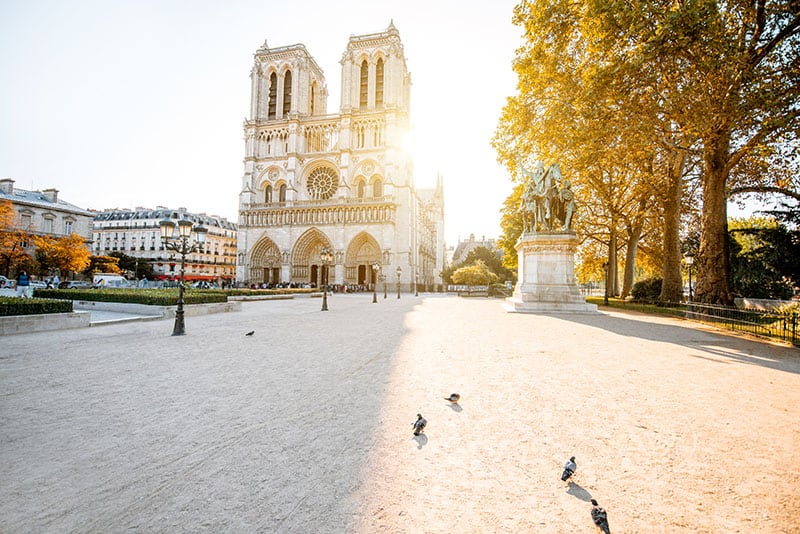
9. Paris, France
Paris, the capital city of France is a beautiful Gothic city. Although it has been destroyed and rebuilt many times throughout history, there are still some gothic buildings that remain intact today.
Notre-Dame de Paris Cathedral in particular is one of the most famous examples of French gothic architecture ever built. It took nearly two centuries to complete and is an iconic symbol of Paris.
Other Gothic buildings in Paris include The Louvre Palace, the Palais de la Cite, the Palais de Justice, Hotel Dieu, Le Grand Palais, the Gare du Nord train station, Les Invalides and Pont Alexandre III.
Best Gothic Architecture to See in Paris:
- Notre-Dame Cathedral – Masterpiece of French Gothic architecture, built 1163-1345. Pioneering use of flying buttresses, spectacular rose windows, and iconic twin towers. Recently restored and reopened after the 2019 fire.
- Sainte-Chapelle – Royal chapel built 1242-1248 to house Christ’s Crown of Thorns. Features 15 stunning stained glass windows covering 6,458 square feet, depicting 1,113 biblical scenes.
- Basilica of Saint-Denis – The first Gothic building ever constructed (1136-1144), cradle of Gothic architecture. Royal necropolis containing tombs of French monarchs.
- Saint-Germain-des-Prés – One of Paris’s oldest churches, with Romanesque tower and Gothic choir rebuilt in the 12th century.
- Church of Saint-Séverin – Flamboyant Gothic church in the Latin Quarter, built 13th-15th centuries, featuring twisted spiral columns.
- Conciergerie – Medieval Gothic palace and prison on Île de la Cité, built 1302-1313. Features the stunning Gothic Salle des Gens d’Armes.
10. Florence, Italy
Florence is the birthplace of Renaissance architecture, but it also has some truly beautiful gothic churches. One of the most charming cities in Italy, it flourished during the late Gothic period.
Construction of Florence Cathedral in the Gothic style began in 1296. However, the famous dome by Filippo Brunelleschi was completed in 1436 and is in the Renaissance style.
Best Gothic Architecture to See in Florence:
- Florence Cathedral (Cathedral of Santa Maria del Fiore) – One of the largest Gothic cathedrals in Europe. Construction began in 1296 in Gothic style, though the famous dome by Brunelleschi (1436) is Renaissance. Can accommodate 30,000 worshippers.
- Giotto’s Campanile – Freestanding Gothic bell tower next to the cathedral, designed by Giotto in 1334. Stands 84.7 meters tall with intricate marble decoration in white, green, and pink.
- Santa Croce – Largest Franciscan church in the world, built in Gothic style 1294-1442. Houses tombs of Michelangelo, Galileo, and Machiavelli, with frescoes by Giotto.
- Santa Maria Novella – Dominican Gothic church begun in 1279, featuring stunning facade designed by Leon Battista Alberti (completed 1470). Contains masterpieces of Gothic fresco art.
- Orsanmichele – Unique Gothic building originally constructed as a grain market (1337), later converted to a church. Features Gothic tabernacle by Orcagna.
- Palazzo Vecchio – Gothic fortress-palace built 1299-1314, with distinctive 94-meter tower dominating Florence’s skyline.

11. Edinburgh, Scotland
The city of Edinburgh in Scotland is a popular tourist destination for people interested in the gothic style of architecture and history. Not only does it have many beautiful churches which were built during medieval times but also has underground vaults.
Edinburgh is home to one of the finest examples of gothic architecture: Edinburgh Castle. This beautiful castle is located on a volcanic crag and overlooks the whole city.
Best Gothic Architecture to See in Edinburgh:
- St Giles’ Cathedral – The High Kirk of Edinburgh, built in the 14th-15th centuries with distinctive crown spire added in 1495. Features beautiful stained glass windows and the ornate Thistle Chapel.
- Scott Monument – Victorian Gothic monument dedicated to Sir Walter Scott, completed in 1844. At 200 feet tall, it’s the second-largest monument to a writer in the world. Climb 287 steps for panoramic views.
- Edinburgh Castle – Historic fortress dating back to the 12th century with Gothic additions including St. Margaret’s Chapel, the oldest surviving building in Edinburgh.
- Rosslyn Chapel – 15th-century Gothic chapel in nearby Roslin village, renowned for intricate stone carvings including the famous Apprentice Pillar. Featured in “The Da Vinci Code.”
- Magdalen Chapel – Small Gothic chapel built 1541-1544, containing the only pre-Reformation stained glass in Scotland still in its original location.
- Greyfriars Kirk – Gothic church built 1620, though its graveyard contains earlier Gothic monuments. Famous for Greyfriars Bobby, the loyal terrier.

12. Zagreb, Croatia
This Gothic city has an amazing gothic structure, Zagreb Cathedral. This monument was built in the 19th century and has two wonderful spires which are 341 feet high.
Unfortunately, one of the spires was damaged in an earthquake in 2020 so the other spire was also removed for safety and both are currently being restored.
The inside of this beautiful building contains some incredible stained glass windows and marble statues.
Best Gothic Architecture to See in Zagreb:
- Zagreb Cathedral (Cathedral of the Assumption of the Blessed Virgin Mary) – Built in Gothic style in the 13th century, with twin spires originally 341 feet high (currently under restoration after 2020 earthquake damage). Features stunning stained glass windows and marble altars.
- Stone Gate (Kamenita Vrata) – Gothic gateway from the 13th century, the only preserved gate of the old city walls. Houses a chapel with a painting of Mary that miraculously survived a fire in 1731.
- St. Mark’s Church – Gothic church built in the 14th century, famous for its colorful tiled roof displaying the coats of arms of Zagreb and Croatia. Features Gothic portal with statues.
- Lotrščak Tower – Medieval fortified tower built in the mid-13th century as part of city defenses. Climbs up for views of Zagreb’s Gothic architecture.
- Croatian Parliament Building – Neo-Gothic palace built in 1908, formerly the seat of the Croatian-Slavonian-Dalmatian Sabor.

13. Salzburg, Austria
The birthplace of Mozart is also known for its gothic architecture and history. Nonnberg Abbey and St. Peter’s Abbey were both erected in the Gothic style. The latter was founded in 696AD and the oldest parts of the building are still standing today.
The city’s famous landmark is Salzburg Castle which was built in 1077, however, much of it has been renovated since then. This historic site is located high above the city, giving panoramic views of the surrounding area.
Best Gothic Architecture to See in Salzburg:
- Salzburg Cathedral – While primarily Baroque after rebuilding, retains Gothic crypt and foundations from the medieval period. The Gothic structure was built in the 12th century before being rebuilt in the 17th.
- St. Peter’s Abbey – Founded in 696 AD, one of the oldest monasteries in the German-speaking world. The Gothic chapel and catacombs date from the 12th century.
- Nonnberg Abbey – Benedictine nunnery founded in 714 AD, with Gothic church rebuilt in the 15th century. Features beautiful Gothic altars and stained glass.
- Franziskanerkirche (Franciscan Church) – Gothic church built in the 13th-15th centuries, featuring soaring Gothic nave and Michael Pacher’s late Gothic winged altar.
- Hohensalzburg Castle – Massive medieval fortress begun in 1077 with significant Gothic additions in the 15th-16th centuries, including the Golden Room and torture chamber.

14. York, U.K.
York is one of the best Gothic cities in the world and a UNESCO World Heritage Site. It was an important post due to its location on trade routes between England and Scotland by land and sea.
York has over 1,500 listed buildings, many of which are in the gothic style. Largely untouched by WWII bombing campaigns, the city has many gothic buildings that have remained relatively intact since medieval times. This includes York Minster which is one of England’s most impressive cathedrals.
Best Gothic Architecture to See in York:
- York Minster – One of the largest Gothic cathedrals in Northern Europe, built 1220-1472. Features the famous Great East Window, the world’s largest expanse of medieval stained glass, and the Central Tower rising 235 feet.
- Clifford’s Tower – 13th-century tower built on a Norman motte, featuring quatrefoil design unique among English castles. Part of York Castle fortifications.
- St. William’s College – Half-timbered Gothic building built in 1461 to house the chantry priests of York Minster.
- Merchant Adventurers’ Hall – Magnificent medieval guildhall built 1357-1361 with Gothic Great Hall featuring timber roof and brick undercroft.
- Holy Trinity Church – Hidden Gothic gem built in the 14th-15th centuries, featuring beautiful medieval stained glass and box pews.
- Bootham Bar – Gothic gateway built in the 14th century, one of four principal gateways through York’s city walls.

15. Riga, Latvia
The skyline of the Old Town in Riga is dominated by magnificent gothic spires. The famous Riga Cathedral was built in 1211. This cathedral has survived many disasters through history, including fires and explosions caused by enemy attacks.
The House of the Black Heads is another famous example of Riga’s gothic architecture. It began as a chapel for the Brotherhood of Blackheads in 1334, but was eventually expanded into a guildhall, with guilds for bakers, butchers, coopers and others being established there. Nowadays it is a museum containing artifacts from the middle ages.
Best Gothic Architecture to See in Riga:
- Riga Cathedral – Built in 1211, one of the largest medieval churches in the Baltic states. Features Gothic elements added in the 15th century including the beautiful Gothic choir and nave.
- House of the Blackheads – Originally built in 1334 for the Brotherhood of Blackheads (guild of unmarried merchants). The ornate Gothic facade with stepped gables was reconstructed after WWII.
- St. Peter’s Church – Gothic church originally built in 1209, rebuilt in the 15th century with distinctive 123-meter spire. Offers panoramic views of Riga’s Old Town from the observation deck.
- St. Jacob’s Cathedral – Gothic church built in the 13th century, featuring 80-meter spire. Now serves as the Roman Catholic Cathedral.
- Great Guild Hall – Gothic building constructed in 1854 in English Tudor Gothic style, though based on medieval Hanseatic guild traditions.
- Swedish Gate – Only remaining gate from the city wall system, built in 1698 in Gothic style, located in a 13th-century defensive tower.

16. Munich, Germany
Munich is one of Germany’s best gothic cities because it has some wonderful examples of gothic architecture that date back centuries ago. Some great gothic buildings in Munich include Alte Hof, a medieval castle, The Old Town Hall and Karlstor Gate.
Best Gothic Architecture to See in Munich:
- Frauenkirche (Cathedral of Our Dear Lady) – Munich’s most iconic landmark, built 1468-1488 in Late Gothic style. Twin onion-domed towers rise 99 meters and can hold 20,000 people.
- Old Town Hall (Altes Rathaus) – Gothic town hall built in 1474 by Jörg von Halsbach, featuring the distinctive Gothic tower that frames one side of Marienplatz square.
- St. Peter’s Church (Peterskirche) – Munich’s oldest church, rebuilt in Gothic style in the 14th century. Climb “Old Peter’s” 299 steps for spectacular city views.
- Alte Hof – Medieval Gothic castle built in the 12th century, former imperial residence of Louis IV. Features Gothic bay window and gatehouse.
- Karlstor – Gothic city gate built in the 14th century as part of Munich’s second city wall. Originally called Neuhauser Tor.

17. Segovia, Spain
Segovia has some of the best examples of Gothic architecture in the world. The city is home to many gothic buildings that were built hundreds of years ago like the famous Alcazar Castle and Cathedral of Segovia.
One of the buildings that best illustrates the evolution of Gothic is the former Monastery of San Antonio el Real. Now a hotel, it conserves the fortress features of the earlier construction.
Best Gothic Architecture to See in Segovia:
- Segovia Cathedral – Known as the “Lady of Cathedrals,” this Late Gothic masterpiece was built 1525-1577, making it the last Gothic cathedral built in Spain. Features soaring vaults and beautiful cloister.
- Alcázar of Segovia – Gothic-Mudéjar royal palace built on a Roman fortification. The current Gothic structure dates from the 12th century with major Gothic additions in the 15th century.
- Church of Vera Cruz – Unique twelve-sided church built in 1208 by the Knights Templar, combining Romanesque and Early Gothic elements.
- San Martín Church – 12th-century Romanesque church with Gothic tower and porch added in the 14th century.
- Monastery of San Antonio el Real – Former Gothic palace converted to monastery, built in the 15th century. Features Gothic cloisters and mudéjar decoration.

18. Budapest, Hungary
Budapest is the capital of Hungary and a masterpiece of gothic architecture. It lays on both sides of the Danube river and was created in 1873 when Buda, Pest and Óbuda united to one big city.
The Hungarian Parliament Building, Buda Castle and Saint Stephen’s Basilica are built in the Gothic style. Fisherman’s Bastion (Halászbástya), constructed between 1895 and 1902, was designed in the neo-Gothic style by architect Frigyes Schulek after a design by Miklós Ybl. Built to provide a dignified setting for the statues of patron saints of Hungary sculpted by Alajos Stróbl, the Bastion offers fantastic views of the Danube and Pest.
Best Gothic Architecture to See in Budapest:
- Hungarian Parliament Building – Neo-Gothic masterpiece built 1885-1904, inspired by Westminster Palace. Third-largest parliament building in the world with 691 rooms and a 96-meter high central dome.
- Matthias Church – Originally built in 13th century, extensively rebuilt in Gothic style during the reign of King Matthias Corvinus (1458-1490). Features stunning Zsolnay ceramic roof tiles and Gothic tower.
- Fisherman’s Bastion – Neo-Gothic terrace built 1895-1902, designed by Frigyes Schulek. Seven towers represent the seven Magyar tribes who founded Hungary.
- Vajdahunyad Castle – Built in 1896 for the Millennial Exhibition, showcasing Gothic architectural elements alongside Romanesque, Renaissance, and Baroque styles.
- St. Stephen’s Basilica – While primarily Neo-Renaissance, incorporates Gothic Revival elements. Completed in 1905, houses the mummified right hand of St. Stephen.
- Chapel in Városliget Park – Gothic Revival chapel built for the 1896 Millennial celebrations, featuring intricate stonework.

19. Oxford, Great Britain
Oxford is known as the best university town in Europe, but there’s also a lot to see outside of education. The city has some impressive gothic buildings like Christ Church College and plenty of museums focusing on archaeology and history.
Balliol College Chapel is a great example of Gothic Revival architecture, taking inspiration from medieval style.
Best Gothic Architecture to See in Oxford:
- Magdalen College Tower – Magnificent Perpendicular Gothic bell tower built 1492-1509, standing 44 meters tall. Famous for the May Morning tradition when choir sings from the top.
- Divinity School (Bodleian Library) – Built 1427-1483, featuring the earliest example of fan vaulting in Oxford. The intricate stone ceiling is considered one of the finest Gothic interiors in England.
- New College – Founded 1379, features beautiful Perpendicular Gothic chapel and cloister. The college’s Great Quadrangle is a masterpiece of medieval planning.
- All Souls College – Founded 1438, showcasing Perpendicular Gothic architecture with beautiful chapel featuring original medieval misericords and stained glass.
- St Mary’s Church – University church built 13th-15th centuries, with magnificent tower offering best views of Oxford’s Gothic skyline after climbing 127 steps.
- Christ Church Cathedral – Smallest cathedral in England, built in the 12th century with Gothic additions. Features beautiful fan vaulting in the choir.

20. Tallinn, Estonia
A small city with a rich history, the capital of Estonia has some of the most impressive gothic architecture in Europe. Tallinn is one of the best examples of a Gothic city because it was part of Hanseatic League from the end of the 13th century.
The architecture here was influenced by Gotland island in Sweden. The city has many ancient structures built hundreds of years ago.
If you get the chance to visit this Gothic town in December, don’t miss Tallinn Christmas Market. Check out our guide to the best Tallinn restaurants for tips on where to eat.
Best Gothic Architecture to See in Tallinn:
- St. Olaf’s Church – Built in 1267, was once the tallest building in the world (1549-1625) at 159 meters. Current spire reaches 123.7 meters and offers spectacular views of Tallinn’s medieval skyline.
- Tallinn Town Hall – Only surviving Gothic town hall in Northern Europe, built 1402-1404. Features 64-meter tower with weather vane “Old Thomas,” the guardian of the city.
- Toompea Castle – Gothic castle dating from the 13th century, now housing Estonian Parliament. Features distinctive Tall Hermann tower rising 45.6 meters.
- St. Catherine’s Passage – Medieval street flanked by Gothic buildings and ruins of St. Catherine’s Dominican monastery, featuring artisan workshops in Gothic vaults.
- Church of the Holy Spirit – Gothic church built in the 14th century, featuring the oldest public clock in Tallinn (1684) and beautiful Gothic interior with painted ceiling.
- Great Guild Hall – Gothic building constructed in 1410 for the most important medieval merchant guild, now housing the Estonian History Museum.

21. Vienna, Austria
This Austrian city boasts many famous Gothic buildings, including St. Stephen’s Cathedral and The Hofburg Palace, which contains the famous Spanish Riding School. Although The Hofburg has a mix of architectural styles, the Imperial Court Chapel (Hofburgkapelle) has a distinctly Gothic appearance.
Visit Vienna’s Christmas Markets for great shopping and festive food.
Best Gothic Architecture to See in Vienna:
- St. Stephen’s Cathedral (Stephansdom) – Vienna’s most iconic landmark, built 1137-1160 with Gothic additions 1230-1340. Features 136.4-meter South Tower (Steffl), stunning tile roof with 230,000 glazed tiles, and Gothic catacombs.
- Hofburgkapelle (Imperial Court Chapel) – Gothic chapel within the Hofburg Palace built in the 13th century, where the Vienna Boys’ Choir performs Sunday mass.
- Maria am Gestade – Gothic church built 1394-1414, featuring a delicate openwork Gothic spire and one of Vienna’s most beautiful Gothic interiors.
- Minoritenkirche – Gothic church built 1339 in French Gothic style, unusual for Vienna. Houses a mosaic copy of Leonardo’s “Last Supper.”
- Vienna City Hall (Rathaus) – Neo-Gothic building completed in 1883, designed by Friedrich von Schmidt. Features central tower rising 98 meters topped with the 3.4-meter “Rathausmann” statue.
- Votivkirche – Neo-Gothic church built 1856-1879, featuring twin spires reaching 99 meters. One of the most important Gothic Revival buildings in Europe.

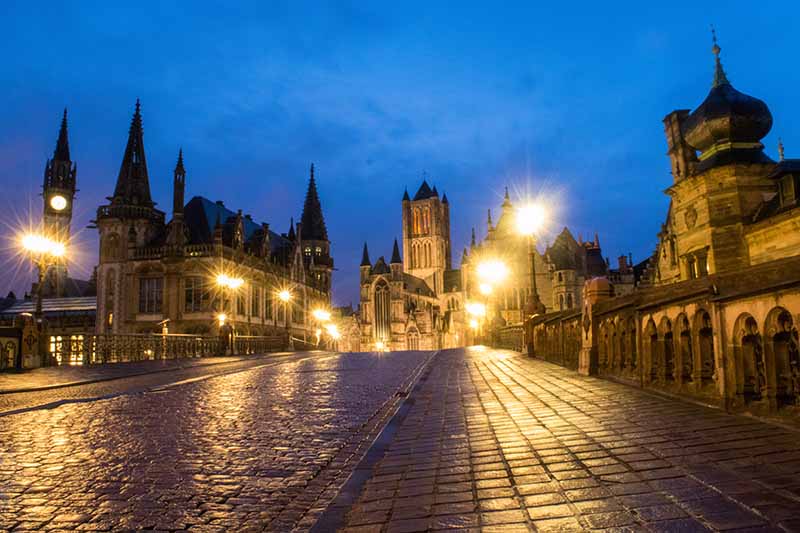
22. Ghent, Belgium
Ghent’s most important Gothic monument is its Cloth Hall and Belfry Tower. Built in the Brabant Gothic style, it shows up on many pictures of Ghent. This is the tallest belfry in Belgium, at 91 meters.
Ghent Cloth Hall was originally used to trade cloths, however the stalls have been removed now and nowadays it hosts various events. You can even take a tour if you want!
Best Gothic Architecture to See in Ghent:
- St. Bavo’s Cathedral (Sint-Baafskathedraal) – Gothic cathedral built 1274-1569, housing the famous Ghent Altarpiece (1432) by Jan van Eyck. Features impressive Gothic choir and Romanesque crypt.
- Ghent Belfry – UNESCO World Heritage Site, the tallest belfry in Belgium at 91 meters. Built 1313-1380 in Brabant Gothic style, topped with gilded copper dragon.
- Cloth Hall (Lakenhalle) – Gothic trade hall built in 1425, featuring buttresses, roof dormers, and stepped gables characteristic of civic Gothic architecture.
- Saint Nicholas’ Church (Sint-Niklaaskerk) – 13th-century Gothic church built from rare blue-gray Tournai limestone. Features imposing central tower and beautiful Gothic interior.
- Castle of the Counts (Gravensteen) – Medieval fortress built in 1180 with Gothic additions in the 13th-14th centuries. Features impressive fortifications and torture museum.
- Town Hall (Stadhuis) – Complex featuring multiple architectural styles, with the oldest Gothic wing built in 1518 in Brabantine Gothic style.
23. Salamanca, Spain
Salamanca is one of Spain’s oldest cities, with buildings that are considered fine examples of Gothic architecture. Of particular interest are the architectural features found in old college buildings such as the University of Salamanca, the oldest in Spain.
Salamanca was an educational centre during the 12th and 13th centuries which is why these old college buildings are so well preserved. Other magnificent secular buildings in Salamanca include the City Hall and the New Cathedral.
The main element that characterizes Salamanca Gothic architecture is its rose window design. In addition to the rose windows, Salamanca also has many brick towers that are usually square-shaped.
Best Gothic Architecture to See in Salamanca:
- New Cathedral of Salamanca – Late Gothic cathedral built 1513-1733, one of the last Gothic cathedrals in Spain. Features stunning Gothic altarpiece and beautiful stained glass windows with distinctive rose window design.
- Old Cathedral of Salamanca – Romanesque-Gothic cathedral built 1120-1178, connected to the New Cathedral. Features the Torre del Gallo (Rooster Tower) and beautiful Byzantine-influenced frescoes.
- University of Salamanca – Founded in 1218, the university’s facade (built 1529) is a masterpiece of Plateresque Gothic. The library houses 2,700 manuscripts and 62,000 volumes.
- Casa de las Conchas (House of Shells) – Gothic palace built 1493-1517, adorned with over 300 scallop shell decorations on its facade. Now houses a public library.
- Convento de San Esteban – Dominican monastery built in Gothic style 1524-1610, featuring magnificent Plateresque Gothic facade and beautiful cloisters.
- Clerecia Church – Baroque Jesuit church built on Gothic foundations with Gothic elements visible in the lower structure.

24. Ypres, Belgium
You could definitely class Ypres as a Goth city. It is home to the amazing St Martin’s Cathedral. Standing 102 meters high, the cathedral is one of the tallest buildings in Belgium.
Ypres also has numerous other incredible Gothic landmarks. The entire city was built during the Middle Ages, and everything within its walls is gothic (or neo-gothic), from the houses to the churches.
The Ypres Cloth Hall and its belfry tower are a reproduction of the original 13th century structure and a UNESCO World Heritage Site.
Best Gothic Architecture to See in Ypres:
- Cloth Hall and Belfry – UNESCO World Heritage Site, originally built in the 13th century and reconstructed after WWI. One of the largest commercial Gothic buildings in Europe, stretching 133 meters long. The belfry tower rises 70 meters.
- St. Martin’s Cathedral – Gothic cathedral originally built in the 13th century, completely destroyed in WWI and reconstructed 1922-1930. At 102 meters, the tower is one of Belgium’s tallest church towers.
- Menin Gate Memorial – While built in 1927, the memorial uses Gothic arches and is inscribed with names of 54,000 missing WWI soldiers.
- Market Square (Grote Markt) – Surrounded by reconstructed Gothic guild houses and the Cloth Hall, recreating the medieval Gothic town center.
- St. George’s Memorial Church – British memorial church built 1927-1929 in Gothic style, dedicated to British and Commonwealth soldiers.

25. Bamberg, Germany
Bamberg is one of the best gothic cities in Germany. It is home to some very beautiful gothic architecture that dates back centuries ago.
The city also played an important role during the Protestant Reformation, which took place from 1517-1648 A.D.
Best Gothic Architecture to See in Bamberg:
- Bamberg Cathedral – UNESCO World Heritage Site built 1004-1012, rebuilt in Late Romanesque-Gothic style 1211-1237. Features four towers and houses the tomb of Pope Clement II, the only papal grave north of the Alps.
- Altes Rathaus (Old Town Hall) – Unique Gothic town hall built on an artificial island in the middle of the Regnitz River. The Gothic structure dates from 1386 with beautiful frescoes added in the 18th century.
- Neue Residenz – Palace complex featuring Gothic elements in the Old Palace (Alte Hofhaltung) section, built in the 15th century around a picturesque courtyard.
- St. Michael’s Abbey – Benedictine monastery built on Michaelsberg hill, featuring Romanesque-Gothic church (1009-1015) with beautiful ceiling paintings depicting 578 plants and flowers.
- Klein Venedig (Little Venice) – Row of half-timbered Gothic fishermen’s houses along the Regnitz riverbank, dating from the 14th-15th centuries.

26. Lisbon, Portugal
Searching for iconic Gothic architecture in Lisbon? Here are three sites you simply must see.
Jerónimos Monastery is one of the greatest examples of late Gothic Manueline architecture in Portugal. It was built as a monastery for monks where they would pray and focus on God 24 hours a day. The site itself offers an amazing view over the city due to its location along the River Tagus.
Lisbon Cathedral, also known as the Sé de Lisboa, is one of Portugal’s most important buildings. Although there have been subsequent renovations since its construction began in 1147, you can still see the Gothic influence in this structure.
The Castle of São Jorge was taken over by Afonso Henriques in the 12th century, who turned it into a Gothic fortress. It is located on the highest point within Lisbon overlooking the rest of the city and offers some great views.
Best Gothic Architecture to See in Lisbon:
- Jerónimos Monastery – UNESCO World Heritage Site and masterpiece of Manueline Gothic architecture, built 1501-1601. Features intricate stone carvings, maritime motifs, and houses the tombs of Vasco da Gama and poet Luís de Camões.
- Lisbon Cathedral (Sé de Lisboa) – Portugal’s oldest church, begun in 1147 in Romanesque style with significant Gothic additions in the 14th century including the Gothic cloister and rose window.
- Belém Tower (Torre de Belém) – UNESCO World Heritage Site built 1514-1520 in Manueline Gothic style. Defensive tower featuring maritime decorations, Moorish-style watchtowers, and ornate stonework.
- Castle of São Jorge (Castelo de São Jorge) – Moorish castle fortified in Gothic style in the 12th century after Christian reconquest. Offers panoramic views across Lisbon.
- Carmo Convent – Gothic convent built 1389-1423, partially destroyed in the 1755 earthquake. The roofless ruins with pointed Gothic arches create a dramatic archaeological museum.
- Church of Santa Maria de Belém – Gothic parish church built in the 16th century near Jerónimos Monastery, featuring Manueline portal.

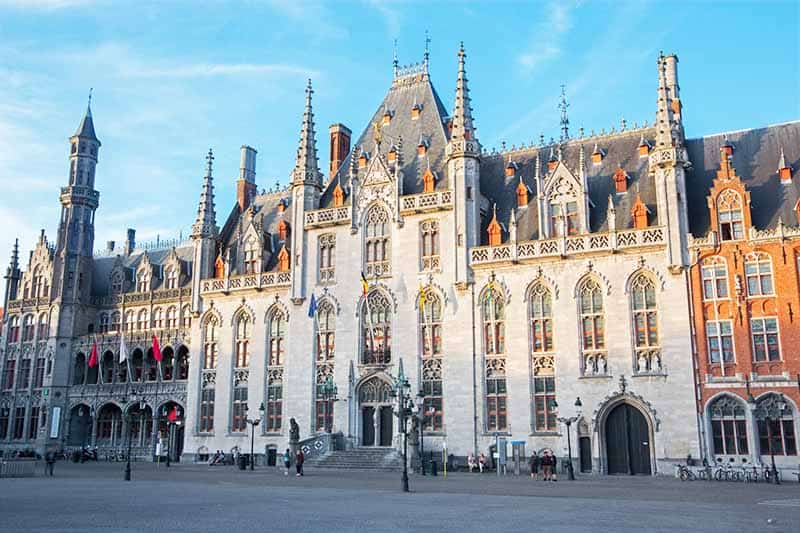
27. Bruges, Belgium
Bruges is one of Belgium’s best gothic cities. It has some great examples of gothic architecture that date back centuries ago.
Best Gothic Architecture to See in Bruges:
- Basilica of the Holy Blood – Gothic chapel built in the 12th century (lower chapel) and rebuilt in Gothic style in the 15th-16th centuries (upper chapel). Houses a venerated relic believed to contain Christ’s blood.
- Bruges City Hall (Stadhuis) – One of the oldest city halls in the Low Countries, built 1376-1420 in Flamboyant Gothic style. Features ornate facade with turrets and Gothic Hall with polychrome vaulted ceiling.
- Belfry of Bruges – UNESCO World Heritage Site, iconic 83-meter medieval bell tower built 1240-1482. Climb 366 steps for panoramic views. Houses 47-bell carillon.
- Church of Our Lady (Onze-Lieve-Vrouwekerk) – Gothic church built 13th-15th centuries with 115.5-meter brick tower, second tallest brick tower in the world. Houses Michelangelo’s Madonna and Child sculpture.
- Gruuthusemuseum – Gothic palace built in the 15th century for the Lords of Gruuthuse, showcasing medieval and Gothic decorative arts.
- Hospital of St. John (Sint-Janshospitaal) – Dating from the 12th century, one of Europe’s oldest surviving hospital buildings. Features Gothic wards and houses Hans Memling Museum.
28. Rouen, France
The great Gothic Cathédrale Notre-Dame de Rouen took hundreds of years to build. The outside of the church has been immortalized by French Impressionist painter Claude Monet in a series of artworks.
The northern French city was also home to the Rouen School, a circle of painters influenced by Flemish painting and Gothic manuscript illumination. Rouen Cathedral has three impressive towers: Butter Tower, Saint-Romain Tower and Lantern Tower and spire.
Best Gothic Architecture to See in Rouen:
- Rouen Cathedral (Cathédrale Notre-Dame de Rouen) – Masterpiece of French Gothic architecture built 12th-16th centuries, immortalized in Claude Monet’s series of paintings. Features three towers: the Butter Tower (75m), Saint-Romain Tower (82m), and the cast-iron spire reaching 151 meters.
- Saint-Ouen Abbey – Large Gothic church built 1318-1537, considered one of the finest examples of Rayonnant Gothic architecture in France. Features stunning stained glass and soaring interior.
- Church of Saint-Maclou – Flamboyant Gothic church built 1437-1521, featuring elaborate stone lacework facade and beautiful organ loft.
- Palais de Justice – Gothic courthouse built in the 16th century, partially damaged in WWII and beautifully restored. Features ornate Late Gothic facade.
- Gros-Horloge – Renaissance astronomical clock mounted on Gothic arch spanning Rue du Gros-Horloge. The Gothic belfry dates from 1389.
- Aître Saint-Maclou – Rare surviving medieval plague cemetery with half-timbered Gothic buildings (1526-1533) featuring macabre carvings.

29. Dublin, Ireland
In the past, Dublin was a Gothic city that had some of the finest architecture in all of Europe. Although some of that is gone, there still remains some beautiful Gothic architecture. Dublin is considered one of the best Gothic cities in the world because it has several styles of gothic buildings:
Best Gothic Architecture to See in Dublin:
- St. Patrick’s Cathedral – Ireland’s largest church, built in Early English Gothic style 1220-1260. Features 43-meter tower and houses the tomb of Jonathan Swift, author of “Gulliver’s Travels.”
- Christ Church Cathedral – Built 1028 with major Gothic reconstruction 1172-1240. Features Romanesque nave with Gothic choir and the largest medieval crypt in Britain or Ireland.
- The Chapel Royal (Dublin Castle) – Gothic Revival chapel built 1807-1814, decorated with over 100 carved heads of historical figures. Considered a masterpiece of Irish Gothic Revival.
- Trinity College Long Room Library – Neo-Gothic Long Room built 1712-1732, though the barrel-vaulted ceiling was added in 1860 in Gothic style. Houses 200,000 of Trinity’s oldest books including the Book of Kells.
- St. Audoen’s Church – Only surviving medieval parish church in Dublin, built in the 12th century with Gothic additions. Features three 15th-century bells, Ireland’s oldest.
- Malahide Castle – Medieval castle dating from 1185 with significant Gothic additions in the 14th-16th centuries. Features Gothic great hall and towers.

30. Siena, Italy
The medieval heart of Tuscany, Siena is one of Italy’s most perfectly preserved Gothic cities. The entire historic center is a UNESCO World Heritage Site, with Gothic architecture dominating the cityscape.
The shell-shaped Piazza del Campo is considered one of Europe’s greatest medieval squares. The Gothic Palazzo Pubblico and its Torre del Mangia dominate the square – at 102 meters tall, the tower is one of the tallest secular Gothic structures in Italy. Built 1338-1348, climbing the tower’s 400 steps rewards visitors with spectacular Tuscan views.
Unlike many Italian cities, Siena rejected Renaissance architecture in favor of Gothic-Gothic style, giving the city a remarkably unified medieval appearance. The narrow Gothic streets, fortified gates, and noble palaces create an atmospheric journey back to the 13th-14th centuries.
Best Gothic Architecture to See in Siena:
- Siena Cathedral (Duomo di Siena) – Italian Gothic masterpiece built 1215-1263 in black and white marble. Features stunning facade with rose window, intricate floor mosaics, and Piccolomini Library with Renaissance frescoes.
- Torre del Mangia – 102-meter Gothic tower built 1338-1348, second-tallest medieval tower in Italy. Climb 400 steps for panoramic views of Tuscany’s Gothic cityscape.
- Palazzo Pubblico – Gothic town hall built 1297-1310, housing Simone Martini’s “Maestà” and Ambrogio Lorenzetti’s “Allegory of Good and Bad Government” frescoes.
- Basilica of San Domenico – Gothic church built 1226-1465, housing the preserved head of St. Catherine of Siena. Features austere brick exterior and stunning interior with frescoes.
- Fonte Gaia – Gothic fountain in Piazza del Campo, original created by Jacopo della Quercia 1409-1419. The current version is a 19th-century copy.
- Palazzo Salimbeni – 14th-century Gothic palace, headquarters of Monte dei Paschi di Siena, the world’s oldest continuously operating bank (founded 1472).
- Santa Maria della Scala – Medieval hospital complex opposite the cathedral, built in the 13th century with beautiful Gothic halls and frescoes.

31. Chartres, France
Located just 90 kilometers southwest of Paris, Chartres is home to one of the finest examples of French High Gothic architecture in existence. The UNESCO World Heritage Site Chartres Cathedral is often called “the high point of French Gothic art” and represents Gothic architecture at its most sublime.
Built between 1194-1220 after a fire destroyed the previous Romanesque cathedral, Chartres Cathedral is remarkable for its two asymmetrical spires – the South Tower (103m) from 1144 and the North Tower’s Flamboyant Gothic spire (113m) from 1513. The cathedral features three great rose windows and 176 stained glass windows covering approximately 2,600 square meters – the largest collection of medieval stained glass in the world.
What makes Chartres Cathedral particularly significant is that it retains most of its original 13th-century stained glass, including the famous “Chartres Blue” windows that bathe the interior in ethereal light. The cathedral’s sculptures are considered masterpieces of Gothic art, with over 10,000 figures adorning the facade and interior, depicting biblical scenes and medieval life.
The cathedral’s labyrinth, one of the largest preserved from the Middle Ages, covers the entire width of the nave and was used by pilgrims as a symbolic journey to Jerusalem.
Best Gothic Architecture to See in Chartres Cathedral:
- Royal Portal – Magnificent Gothic sculptures from 1145-1155, depicting Christ in Majesty surrounded by the four evangelists. Contains 24 column statues representing Old Testament figures.
- North Rose Window – 13th-century stained glass masterpiece, 12.9 meters in diameter, depicting the Glorification of the Virgin with Old Testament figures.
- South Rose Window – Created around 1225, showing Christ in Majesty surrounded by the 24 Elders of the Apocalypse in brilliant medieval glass.
- Flying Buttresses – Some of the most impressive Gothic structural supports, added in the 13th century to support the 37-meter high nave.
- Crypt – Largest crypt in France, dating from 1024 with Romanesque and Gothic elements. Houses the Sancta Camisia (Virgin Mary’s veil).
- North Porch – Elaborate Gothic porch with hundreds of sculptures depicting biblical scenes, creation, and the Last Judgment.

32. Rothenburg ob der Tauber, Germany
One of Germany’s best-preserved medieval towns, Rothenburg ob der Tauber appears frozen in time from the 14th century. This walled Bavarian town is a masterpiece of Gothic and medieval architecture, with its romantic towers, half-timbered houses, and cobblestone streets making it one of Germany’s most photographed destinations.
The Market Square (Marktplatz) features the Gothic Town Hall with its 60-meter tower, offering stunning views after climbing 220 steps. The square is surrounded by gabled Gothic buildings housing the Medieval Crime Museum and historic shops, creating one of Germany’s most picturesque Gothic ensembles.
Best Gothic Architecture to See in Rothenburg ob der Tauber:
- St. James’s Church (St. Jakobskirche) – High Gothic church built 1311-1484, housing Tilman Riemenschneider’s Holy Blood Altar (1501-1505), a masterpiece of late Gothic woodcarving.
- Town Hall (Rathaus) – Gothic section built 1250-1400 with 60-meter tower (climb for panoramic views). The Renaissance arcade was added in 1572.
- Medieval Town Walls – Complete 3.5-kilometer fortification with Gothic towers and gates. Walk the covered parapet for views of Gothic rooftops.
- Plönlein – Most photographed corner of Rothenburg, featuring the Siebersturm (tower) and Gothic half-timbered houses at a Y-shaped junction.
- Rödertor (Röder Gate) – Gothic defensive gate from the 14th century with customs house. Part of the town’s fortifications.
- Burgtor (Castle Gate) – Gothic gate built in 1356, entrance to the castle gardens with views over the Tauber Valley.
- Spital (Hospital Quarter) – Gothic hospital complex and fortified gate from the 14th century at the southern entrance to the old town.

33. Venice, Italy
Venice developed its own distinctive style of Gothic architecture that beautifully blends Byzantine, Islamic, and traditional Gothic elements. Venetian Gothic is characterized by ogee arches, elaborate tracery, ornate balconies, and facades adorned with intricate stonework and colorful marble – a style perfectly suited to Venice’s unique position as a maritime republic bridging East and West.
Churches like Santa Maria Gloriosa dei Frari (1250-1338) and Santi Giovanni e Paolo (1246-1430) showcase soaring Gothic interiors filled with masterpieces by Titian, Bellini, and other Venetian masters. These massive brick churches demonstrate how Venice adapted Gothic verticality to its lagoon setting.
Best Gothic Architecture to See in Venice:
- Doge’s Palace (Palazzo Ducale) – Masterpiece of Venetian Gothic built 1340-1420. Features pink and white marble facade, double-tiered Gothic arcades, and Porta della Carta gateway (1438-1442).
- Ca’ d’Oro – “Golden House” built 1428-1430 on the Grand Canal, finest example of domestic Venetian Gothic architecture. Now houses Galleria Franchetti art museum.
- Basilica dei Frari (Santa Maria Gloriosa dei Frari) – Impressive Gothic church built 1250-1338, housing Titian’s “Assumption of the Virgin” and masterpieces by Bellini. Features 70-meter campanile.
- Santi Giovanni e Paolo – Gothic basilica built 1246-1430, burial place of 25 Doges. Features magnificent Gothic portal and interior with Renaissance tombs.
- Ca’ Foscari – Gothic palace built 1452, now part of Venice University. Features elaborate Gothic facade on the Grand Canal at the Volta di Canal.
- Palazzo Contarini del Bovolo – Gothic palace famous for its spiral staircase tower “Bovolo” (snail) built 1499, blending Late Gothic with Renaissance elements.
- Church of Madonna dell’Orto – Gothic church built 1399-1473, featuring beautiful brick facade and Tintoretto masterpieces.

In Conclusion: Planning Your Gothic Architecture Journey
These 34 Gothic cities represent the pinnacle of medieval architecture and urban planning across Europe and beyond. From the soaring spires of Cologne Cathedral to the delicate stonework of Venice’s Doge’s Palace, each city offers a unique perspective on this revolutionary architectural style that dominated Europe for four centuries.
Planning Tips for Visiting Gothic Cities:
- Best Time to Visit: Spring (April-May) and Fall (September-October) offer fewer crowds and beautiful light for photography
- Allow Enough Time: Major Gothic cities like Prague, Paris, and Barcelona deserve at least 3-4 days each
- Book Cathedral Tours in Advance: Popular sites like Sagrada Familia and Notre-Dame require advance tickets
- Look Up: Gothic architecture is designed to draw the eye skyward – don’t forget to appreciate the ceiling vaults and spires
- Golden Hour Photography: Gothic buildings are most dramatic during sunrise and sunset
- Combine Nearby Cities: Many Gothic cities are within day-trip distance of each other (e.g., Paris-Chartres, Prague-Ypres)
Whether you’re an architecture enthusiast, history buff, or simply appreciate the beauty of medieval craftsmanship, these Gothic cities offer unforgettable experiences. Each pointed arch, flying buttress, and stained glass window tells a story of human ambition, faith, and artistic excellence that continues to inspire nearly a millennium later.
Which Gothic city will you visit first?
Read next:
Looking for more travel hacks and tips? From hidden gems to unique experiences, we’ve got you covered.
Join us on Facebook, Instagram, Pinterest and Twitter.
Like this list of the best Gothic cities in the world? Share with friends.
Trending Products

OLEVS Automatic Watches for Men Bus...

Ferragamo Legacy Chronograph Watch

GUESS Stainless Steel Gold-Tone Cry...

Bulova Men’s Classic Sutton 4...

SEIKO Automatic Watch for Men ̵...

Stuhrling Original Mens Skeleton Au...

Bulova Men’s Marine Star Seri...

Stuhrling Original Mens Dress Watch...

Stuhrling Original Men’s Dive...
